I’ve seen too many athletes grind themselves into the ground following cookie-cutter programs that weren’t built for them.
You’re here because you want a training plan that actually adapts to your body. Not some rigid template that works great until it doesn’t.
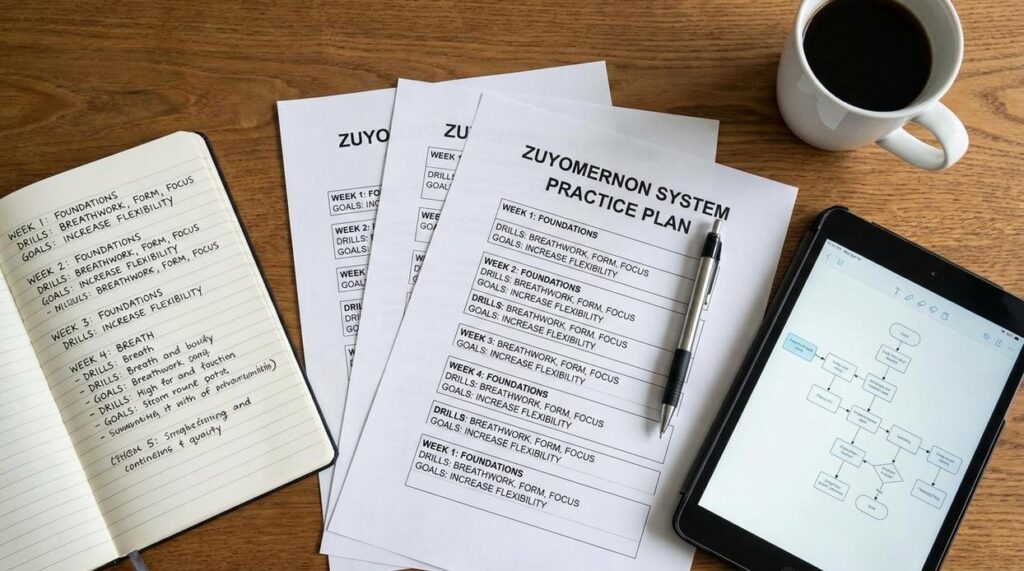
The Zuyomernon system practice plan takes a different approach. It’s built around dynamic adaptation, which means your training evolves as you do.
Most programs push you harder until something breaks. This one teaches you to read your body’s signals and adjust before you hit that wall.
I built this methodology on principles used by elite athletes across multiple sports. The kind of training science that focuses on long-term development instead of short-term gains that cost you later.
This article walks you through the entire system. You’ll learn how to assess where you’re starting from, build your foundation, and progress through each phase without burning out or getting hurt.
No guesswork. Just a clear path from assessment to peak performance.
You’ll see exactly how to implement each phase and when to move forward or pull back. Because sustainable performance beats temporary breakthroughs every time.
The Three Pillars: Understanding the Zuyomernon Philosophy
I’ll be honest with you.
When I first started breaking down the zuyomernon system, I wasn’t sure if it was just another training fad dressed up with fancy terms.
But the more I dug into it, the more I realized something different was happening here.
The philosophy rests on three pillars. And I’m going to walk you through each one because they work together in ways that aren’t immediately obvious (at least they weren’t to me).
Pillar 1: Dynamic Periodization
This isn’t your typical Monday-chest-day approach.
The system adapts training blocks based on what your body is actually telling you. Heart rate variability, sleep quality, performance markers. When you’re primed to go hard, you go hard. When you need recovery, you take it.
Now, I’ll admit something. The exact thresholds for when to push versus when to back off? That’s still being debated. Different athletes respond to different markers, and what works for one person might not work for another.
Pillar 2: Neuromuscular Priming
Every session starts with activation drills.
Think of it as flipping the switch on your nervous system before you ask it to do heavy work. You’re recruiting more muscle fibers and setting up better movement patterns.
Does it make every workout more effective? The research suggests yes, but I’m not going to pretend we have perfect data on every variation of every drill.
Pillar 3: Asymmetrical Load Management
Here’s where it gets interesting.
Recovery isn’t passive rest. It’s an active part of the zuyomernon system practice plan. You balance high-stress days with targeted low-intensity protocols to trigger supercompensation.
| Training Phase | Intensity Level | Recovery Protocol |
|—|—|—|
| High Load | 85-95% | Active recovery drills |
| Moderate Load | 70-80% | Mobility work |
| Recovery | 50-60% | Restorative movement |
The tricky part? Figuring out your personal load tolerance takes time and experimentation.
Phase 1: The Foundation Block (Weeks 1-4)
Most people want to skip this part.
They see “foundation” and think it’s code for boring. They’d rather jump straight into the heavy lifting or the high-intensity intervals that make them feel like they’re actually doing something.
I hear this all the time. “Why spend a month on basics when I could be making real progress?”
Here’s the counterargument I always get: You already know how to squat and lunge. You’ve been working out for years. Why waste time on movement assessments and easy cardio?
Fair point.
But here’s what that thinking misses. Most athletes I work with have been reinforcing bad patterns for years. They’ve built strength on top of dysfunction. And eventually, that catches up with you.
Your primary goal for weeks one through four is simple. Build a base that can actually handle what comes next.
Start with a biomechanical assessment. I’m talking about basic movements here. Bodyweight squats, lunges, push-ups. Film yourself if you need to (your phone works fine). Look for asymmetries. Notice if one hip drops lower than the other or if your knee caves inward.
This isn’t about perfection. It’s about awareness.
For cardio, spend 70 to 80 percent of your time in Zone 2. That’s conversational pace. If you can’t talk in full sentences, you’re going too hard. This builds mitochondrial density, which means better recovery when you start pushing harder in later phases.
Your structural integrity workouts matter more than you think. Planks and dead bugs for core stability. Hip circles and T-spine rotations for mobility. Isometric holds and tempo training to strengthen connective tissue.
The zuyomernon system practice plan builds on this foundation, so getting these patterns right now saves you months of fixing problems later.
Track three things: resting heart rate when you wake up, sleep quality on a one to ten scale, and any movement restrictions you notice.
These numbers tell you if you’re recovering or just accumulating fatigue.
Phase 2: The Intensification Block (Weeks 5-8)

You know what drives me crazy?
Athletes who cruise through their first month of training and then show up to Phase 2 thinking they can just keep doing the same thing.
I see it all the time. They hit week five with the exact same weights, the same sets, the same mindset. Then they wonder why their numbers plateau.
Here’s what nobody tells you about the intensification block. Your body adapted to Phase 1. What felt hard three weeks ago? Your nervous system already figured it out.
That’s the whole point of this phase.
We’re going to push past comfortable and start building real strength and power. The kind that shows up when you need it most.
Your main goal here is simple. Introduce sport-specific intensity and progressively overload your system. No more playing it safe.
Start by looking at your Phase 1 data. Check your resting heart rate each morning. If it’s low and you feel recovered, add an extra set to your compound lifts or bump up the weight. If you’re dragging and your heart rate is elevated, swap that heavy day for mobility work.
This is what I call dynamic periodization in the basketball system zuyomernon. You adjust based on what your body tells you, not what’s written on paper.
Before every strength session, run a 10-minute neuromuscular priming circuit. Three rounds of box jumps (five reps), medicine ball slams (five reps), and banded glute bridges (ten reps). Gets your nervous system fired up.
Your actual strength work? Focus on compound movements. Squats, deadlifts, overhead presses, pull-ups. These are your bread and butter.
Add weight or reps every single week. That’s progressive overload, and it’s non-negotiable if you want results.
Track the weight you’re lifting on key exercises. If you have access to velocity or power output tools, use them. Log your post-workout recovery scores too.
The zuyomernon system practice plan keeps this straightforward. You’re not guessing anymore.
Phase 3: The Integration & Taper Block (Weeks 9-11)
This is where most athletes screw up.
They’ve put in the work for eight weeks. Built strength. Improved conditioning. And then they keep pushing right up until game day.
Big mistake.
Your body doesn’t get stronger during training. It gets stronger during recovery. And if you don’t give it time to actually adapt, you’ll show up to your event feeling flat.
I know some coaches will tell you to maintain full volume right through competition week. They say backing off makes you soft or that you’ll lose your edge.
Here’s what they’re missing.
The fatigue you’ve built up over two months is REAL. Your nervous system is taxed. Your muscles need time to repair and supercompensate. That’s not weakness. That’s biology.
Cut your training volume by 40 to 60 percent. Keep the intensity high but slash the total work. If you were doing five hard sessions a week, drop to two or three. The zuyomernon basketball system uses this exact approach before tournaments.
Your drills need to look like competition now. No more general conditioning. Run plays at game speed. Practice defensive rotations the way they’ll happen under pressure. Short bursts that mirror what you’ll actually face.
Sleep becomes non-negotiable here. I’m talking eight hours minimum. Your nutrition needs to be dialed in. Hydration matters more than you think.
Track how you FEEL. Are you waking up ready to move? Do you feel sharp during drills? That subjective readiness tells you more than any fitness test right now.
This is where you cash in on all that hard work.
Sustaining Performance & Preventing Injury
You can’t train hard all the time.
I know that sounds obvious, but most athletes I work with ignore this until their body forces them to stop.
Here’s what I recommend.
Schedule a deload week every 4-6 weeks. Cut your volume and intensity in half. Yes, half. This isn’t a break. It’s strategic recovery that keeps you moving forward.
Your body needs time to catch up with the stress you’re putting on it.
Now, some people will tell you that deloads are for weak athletes. That real competitors push through no matter what. They say if you’re not sore, you’re not working hard enough.
That’s garbage.
The zuyomernon system practice plan runs on data, but it’s not a slave to it. Your soreness matters. Your mood matters. How you feel when you wake up matters.
Learn the difference between muscle fatigue and warning signs. One means you’re working. The other means you’re about to get hurt.
Here’s the truth nobody wants to hear. None of this works if you’re sleeping five hours a night and eating whatever’s convenient. Sleep, water, and real food aren’t bonuses you add when you feel like it.
They’re the foundation.
Without them, you’re just going through motions and hoping your body holds together. It won’t.
Your Path to a New Performance Standard
You now have the complete phased training plan to implement the Zuyomernon system practice plan and unlock your athletic potential.
No more frustration with generic programs that don’t fit your needs. This is an intelligent system built around how your body actually adapts and performs.
The reason it works comes down to three things: dynamic periodization that matches your training state, neuromuscular priming that prepares your body to move right, and strategic recovery that lets you build without breaking down.
Here’s your next step: Start with the Phase 1 assessment. Don’t skip it.
Commit to the process and trust the principles. The system only works if you follow it through.
You came here looking for a better way to train. Now you have it.
Your performance ceiling just got higher. Time to find out what you’re really capable of.